
- All
- Product Name
- Product Keyword
- Product Model
- Product Summary
- Product Description
- Multi Field Search
English
Views: 0 Author: Site Editor Publish Time: 2026-09-06 Origin: Site


Transfer ladles act as the main artery in die-casting and foundry operations. They move molten metal from the melting furnace directly to the holding crucible or mold. Even minor inefficiencies during this transfer compound rapidly. Heat loss forces operators to overheat the main furnace, wasting energy and degrading metal quality. Heavy tooling causes severe operator fatigue and slows down production cycles. Poor material choices result in iron contamination, which ruins non-ferrous alloys like aluminum and zinc. Traditional metal transfer relies heavily on cast iron because it is familiar and readily available. However, modern casting demands tighter temperature control and higher metal purity. Rapid temperature drops between the furnace and the mold remain a persistent challenge. We must compare traditional cast iron against modern ceramic fiber composites. This technical evaluation establishes a clear framework to determine which technology delivers the best operational reliability, thermal stability, and safety profile for specific casting requirements.
Thermal Efficiency: Ceramic fiber composites offer significantly lower thermal conductivity than cast iron, reducing temperature loss during transfer and lowering required holding furnace temperatures.
Ergonomics and Payload: A ceramic casting ladle typically weighs 40% to 60% less than its cast iron counterpart, directly reducing operator fatigue and decreasing payload stress on automated auto-pour systems.
Metal Purity: Ceramic composite materials are naturally non-wetting to molten aluminum and zinc, eliminating the risk of iron pickup (contamination) and reducing the need for daily protective wash coatings.
Selecting the right transfer vessel requires strict performance metrics. You cannot base this decision on habit. You must evaluate how the vessel interacts with the molten bath, the operator, and the facility environment. Success in molten metal transfer hinges on four primary criteria.
Molten metal loses heat rapidly when exposed to ambient air. The transfer vessel itself acts as a massive heat sink. When you dip a cold or poorly insulated ladle into a furnace, it immediately absorbs thermal energy. This drops the temperature of the metal inside the vessel. To compensate for this loss, foundries often overheat their holding furnaces. Overheating leads to severe metallurgical problems. In aluminum casting, higher temperatures exponentially increase hydrogen gas absorption. As the metal cools in the mold, this hydrogen precipitates out, causing gas porosity in the final casting. Maintaining a consistent metal temperature from dip to pour is a primary success metric. You want the metal to enter the gating system at the exact target temperature without forcing the melting department to run the furnaces hotter than necessary.
Cross-contamination destroys casting quality. Non-ferrous metals like aluminum, zinc, and magnesium are highly reactive in their molten state. When molten aluminum contacts bare iron, it acts as a solvent and dissolves the iron into the melt. This chemical reaction creates complex iron-aluminide intermetallic compounds, commonly referred to as sludge. These compounds manifest as hard spots in the final aluminum casting. Preventing iron dissolution is non-negotiable. The transfer vessel must maintain strict metallurgical integrity throughout its service life, ensuring that the alloy chemistry remains exactly as it was when it left the holding furnace.
Foundry work is physically demanding. Manual operators lift, carry, and pour molten metal hundreds of times per shift. The dead weight of the transfer vessel directly impacts operator fatigue. Heavy tooling increases the risk of repetitive strain injuries and reduces pouring accuracy as operators tire toward the end of a shift. For automated systems, heavy ladles strain robotic transfer arms. Every kilogram of tooling weight subtracts from the available payload capacity of the robot. Lighter vessels improve safety, increase precision, and extend the lifespan of automated equipment by reducing the torque on servo motors during rapid deceleration.
Maintaining transfer vessels requires significant labor. Traditional tools require daily scraping, cleaning, and recoating. Applying refractory wash coatings introduces airborne particulate hazards. Workers breathe in dust from boron nitride or bone ash during the application and cleaning phases. The drying process consumes additional energy and ties up floor space. A successful transfer solution minimizes this daily maintenance burden. It should reduce airborne hazards and free up maintenance personnel for more technical tasks, rather than spending hours prepping hand tools for the next shift.
Cast iron has dominated foundry floors for decades. It provides a rugged, familiar solution for moving molten metal. Understanding its baseline performance helps clarify why it remains popular and where its limitations lie in modern, high-precision casting operations.
Cast iron offers exceptional mechanical strength. It withstands aggressive handling, accidental drops, and heavy impacts against furnace walls. The manufacturing process for iron ladles is well-established, meaning foundries can easily source them in various standardized sizes. However, cast iron possesses very high thermal conductivity. It absorbs heat rapidly from the molten metal and then radiates that heat outward into the foundry environment. This high thermal transfer rate makes temperature control incredibly difficult during long pour cycles. The metal at the edge of the ladle cools faster than the metal in the center, creating temperature gradients that affect the fluidity of the pour.
You cannot use bare cast iron to transfer non-ferrous metals. Molten aluminum will solder directly to the iron surface. To prevent this, operators must apply a refractory wash coating. Common coatings include boron nitride, bone ash, or proprietary ceramic washes. This coating acts as a physical barrier. It prevents the aluminum from dissolving the iron. Applying this coating is a daily, mandatory chore. Operators must clean the ladle, spray or brush on the coating, and thoroughly dry it before use. Any gap, scratch, or thin spot in this coating leads to immediate iron pickup.
Despite its strength, cast iron degrades over time. Continuous exposure to extreme heat cycles causes thermal fatigue. The iron expands and contracts, eventually leading to craze cracking and warping. The ladle lip suffers the most abuse. Operators constantly scrape the lip to remove dross and slag buildup. This mechanical scraping, combined with thermal shock, degrades the pouring edge. A degraded lip causes turbulent pouring. Turbulent flow introduces oxide inclusions into the mold, which compromises the structural integrity of the cast part.
Maintenance Phase | Task Description | Time Required | Hazard Level |
|---|---|---|---|
Pre-Shift | Scrape old slag, apply boron nitride wash, dry with torch. | 30 - 45 Minutes | High (Airborne dust, burn risk) |
Mid-Shift | Spot-check coating integrity, reapply wash to scratched areas. | 10 - 15 Minutes | Medium (Radiant heat exposure) |
Post-Shift | Aggressive scraping of the lip and bowl to remove hardened dross. | 20 - 30 Minutes | Medium (Physical strain, sharp edges) |
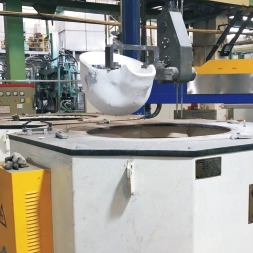
Modern foundries increasingly turn to advanced materials to solve the inherent flaws of iron. A Ceramic Casting Ladle represents a fundamental shift in how we handle molten metal. It relies on chemical inertness and thermal insulation rather than brute mechanical strength.
These ladles are not made from traditional brittle pottery ceramics. They utilize advanced vacuum-formed alumina-silicate fibers. Manufacturers blend these high-temperature fibers with specialized inorganic binders. The vacuum-forming process aligns the fibers into a dense, rigid matrix. The surface often receives a proprietary non-wetting treatment. This creates a composite structure that resists extreme temperatures while remaining incredibly lightweight. The fibrous nature of the material gives it a slight degree of flexibility compared to solid sintered ceramics, allowing it to handle the thermal expansion of the molten metal without fracturing.
The defining feature of a ceramic matrix is its insulating capability. Unlike iron, ceramic fiber has exceptionally low thermal conductivity. When you fill a ceramic vessel with molten metal, the heat stays trapped inside the bath. The ladle walls do not absorb the thermal energy, nor do they radiate heat into the surrounding air. This insulation drastically reduces the temperature drop between the furnace and the casting mold. Operators can maintain tight thermal tolerances without overheating the main furnace. The metal remains highly fluid, ensuring it fills complex mold cavities completely before solidifying.
Alumina-silicate composites are chemically inert to most non-ferrous metals. Molten aluminum, zinc, and magnesium simply do not stick to the surface. This non-wetting characteristic mimics the effect of water rolling off a waxed surface. Because the metal cannot adhere to the substrate, dross and slag buildup is minimal. More importantly, this chemical inertness completely eliminates the risk of iron dissolution. You achieve superior metal purity without relying on fragile wash coatings. The alloy chemistry remains pure from the furnace to the mold.
Casting iron requires expensive sand molds or permanent tooling. Modifying a cast iron design is slow and difficult. Vacuum-forming ceramic fibers is highly adaptable. Manufacturers can easily create custom geometries. They can integrate skimmer baffles directly into the bowl to hold back surface dross during the pour. They can design specialized pouring spouts to ensure a smooth, laminar flow of metal. This formability allows foundries to tailor the vessel exactly to their specific mold gates and pour rates, optimizing the fluid dynamics of the casting process.
To make an informed engineering decision, we must compare these two materials across specific operational categories. The differences dictate how your casting line will perform under daily production stress.
Heat loss dictates your energy strategy. A standard cast iron ladle can lose several degrees per minute during transit. The iron acts as a radiator. To ensure the metal reaches the mold at the correct temperature, foundries must increase the holding furnace setpoint. This wastes massive amounts of energy and degrades the refractory lining of the furnace faster.
A ceramic vessel changes this dynamic entirely. The insulating fiber matrix drops the heat loss rate to a fraction of that seen with iron. The metal retains its heat. Consequently, you can lower the set temperature of your holding furnace. Lowering the furnace temperature saves energy. It also reduces the solubility of hydrogen gas in molten aluminum. Less hydrogen means less porosity in your final castings. The thermal efficiency directly improves your metallurgical yield.
Specific gravity tells the story of weight. Cast iron has a specific gravity of roughly 7.2. Ceramic fiber composites sit between 1.2 and 1.5. A ceramic vessel is substantially lighter than an identically sized iron vessel.
For manual pouring, this weight reduction is transformative. Operators experience less shoulder and back strain. They can control the pour with greater precision, hitting the pour cup accurately without spilling. This reduction in physical strain improves workplace health and boosts daily output.
For automated systems, weight matters just as much. Robotic transfer arms have strict payload limits. A heavy iron ladle consumes a large portion of that payload capacity. A lighter ceramic vessel allows the robot to move faster without stressing the servo motors. When designing new automated work cells, engineers can specify smaller, faster robots because the tooling weight is drastically reduced.
Iron pickup is the enemy of non-ferrous casting. When the protective coating on an iron ladle scratches or wears thin, molten aluminum attacks the bare iron. It dissolves the iron into the melt. This creates complex iron-aluminide intermetallic compounds. These compounds manifest as hard spots in the final casting.
When a CNC machine hits one of these hard spots, the cutting tool chips or breaks. The entire casting becomes scrap, and the machining center experiences unplanned downtime. A ceramic vessel is naturally free of iron. It is chemically inert. Even if the surface gets scratched, there is no iron to dissolve. Eliminating this variable directly reduces machining defects and extends the life of your cutting tools.
Radiant heat poses a constant burn risk. A cast iron ladle filled with 700°C aluminum glows with heat. The outer shell reaches dangerous temperatures. Accidental contact results in severe burns. The radiant heat also exhausts the operator, leading to heat stress during summer months.
Ceramic insulation keeps the outer shell significantly cooler. While still hot, it does not radiate intense heat into the operator's face and hands. This burn risk reduction creates a safer work environment. Furthermore, eliminating the daily application of refractory wash coatings improves air quality. There is no more airborne boron nitride dust. Operators breathe cleaner air, reducing respiratory hazards on the foundry floor.
The daily maintenance workflow for cast iron is labor-intensive. At the start of a shift, operators must scrape out old slag. They must apply a fresh layer of wash coating. They must then pre-heat the ladle to dry the coating completely. If the coating is wet, the molten metal will cause a steam explosion. This process consumes valuable production time.
Ceramic vessels require minimal maintenance. There is no daily coating to apply. Operators perform a simple visual inspection. At the end of a shift, they gently remove any residual dross with a wooden or brass scraper. The shift toward minimal maintenance keeps the production line moving and reduces labor overhead.
Performance Metric | Cast Iron Ladle | Ceramic Fiber Composite Ladle |
|---|---|---|
Thermal Conductivity | Very High (Rapid heat loss) | Very Low (Excellent heat retention) |
Weight / Ergonomics | Heavy (High operator fatigue) | Lightweight (Reduces physical strain) |
Iron Contamination Risk | High (Requires flawless coating) | Zero (Chemically inert material) |
Coating Requirement | Daily application mandatory | None required |
Mechanical Durability | High impact resistance | Susceptible to impact damage |
Transitioning to a Ceramic Casting Ladle requires careful planning. While the technical benefits are clear, the material behaves differently than iron. You must address specific implementation risks to ensure a successful rollout.
The primary drawback of ceramic fiber is its mechanical fragility. It does not possess the impact resistance of cast iron. If an operator drops an iron ladle, it might dent. If an operator drops a ceramic ladle onto a concrete floor, it will likely shatter. Striking the vessel aggressively against the rim of a holding furnace will cause cracks. You must treat these tools with care. They are engineered for thermal performance, not blunt force trauma. Foundries must implement strict handling protocols to prevent accidental damage during transit and storage.
You cannot simply bolt a ceramic bowl to a steel handle. The clamping force will crush the fiber matrix. Ceramic vessels require custom steel cradles or backing baskets. These baskets provide structural support. They cradle the bowl evenly, distributing the lifting forces across the entire surface. When integrating these into automated auto-pour setups, engineers must design precise mounting hardware to secure the basket without pinching the ceramic. Often, a layer of ceramic paper is placed between the steel basket and the ladle to provide a cushion and accommodate slight thermal expansion differences.
Adopting this technology requires a cultural shift on the foundry floor. Operators are accustomed to aggressive handling. They bang iron tools against furnaces to dislodge slag. They use heavy steel chisels to scrape out dross. You must train operators to abandon these habits. They must transition to careful handling. Cleaning requires specialized tools, such as wooden wedges, brass scrapers, or stiff plastic brushes. Using a steel chisel on a ceramic bowl will gouge the surface and ruin the tool. Management must enforce these new cleaning protocols strictly.
Although ceramic ladles do not require wash coatings, they do require careful pre-heating before their very first use. The manufacturing process can leave trace amounts of residual moisture within the fiber matrix. If you plunge a brand-new, cold ladle directly into molten aluminum, this moisture turns to steam instantly. This causes thermal shock and can crack the bowl. You must follow strict pre-heating protocols. Typically, this involves placing the new vessel near the furnace to slowly drive out moisture over several hours before it touches liquid metal. Once the initial moisture is gone, daily pre-heating is much faster than with iron.
Initiate a controlled, single-cell trial to measure actual temperature retention and compare it against your existing iron baseline.
Design and fabricate proper steel support baskets lined with ceramic paper before putting any ceramic vessel into production.
Conduct hands-on training sessions with operators, emphasizing the use of non-ferrous cleaning tools like wooden scrapers.
Establish a strict pre-heating protocol for all new vessels to eliminate manufacturing moisture and prevent thermal shock cracking.
A: The lifespan depends entirely on handling. With careful use and proper cleaning, a ceramic vessel can last several weeks to months in continuous production. Cast iron generally lasts longer against physical impacts, but its usable life is often cut short by thermal warping or lip degradation.
A: No. Ceramic fiber composites are designed specifically for non-ferrous metals like aluminum, zinc, and magnesium. The pouring temperatures for steel and iron are too high and will rapidly degrade or melt the alumina-silicate fiber matrix.
A: No. The inherent chemical properties of the composite material are non-wetting to non-ferrous metals. You do not need to apply boron nitride or bone ash washes, which saves significant daily maintenance time and eliminates airborne dust hazards.
A: You must use softer tools. Never use steel chisels or hammers. Gently scrape the interior with a wooden wedge, a brass scraper, or a stiff plastic brush while the vessel is still warm to remove residual dross without gouging the surface.
A: Yes. Because the insulating properties prevent rapid heat loss during transfer, you do not need to overheat the metal in the holding furnace. This saves energy and reduces hydrogen gas absorption, which minimizes porosity in aluminum castings.


