
- All
- Product Name
- Product Keyword
- Product Model
- Product Summary
- Product Description
- Multi Field Search
English
Views: 0 Author: Site Editor Publish Time: 2026-09-01 Origin: Site


In modern foundry operations, the core room dictates the pace of the entire casting process. Inconsistent core quality or slow cycle times directly create bottlenecks at the molding line. Foundries struggle to balance high-volume production with strict dimensional tolerances. You often face excessive binder usage, high scrap rates from poor core density, and environmental compliance headaches related to amine gas emissions. When core production falters, the entire casting facility experiences downtime and reduced throughput.
Selecting the right Cold Box Core Shooter requires moving beyond basic capacity metrics. We need to look at the fundamental mechanics of the equipment. You must analyze how a machine handles sand compaction, gas distribution, and tooling changeovers to ensure continuous operation. This guide provides a rigorous technical framework for evaluating core shooting systems based on process parameter control, tooling compatibility, and long-term operational reliability.
Process Control is Paramount: Modern core shooters must offer precise control over shoot pressure, gassing, and purging times to ensure uniform core density, high tensile strength, and minimized binder/catalyst consumption.
Integration and Vendor Accountability: Standalone machines often fail to deliver ROI; the system must seamlessly integrate with automated sand preparation, gas generation, and scrubbing systems, ideally under a single-source vendor responsibility to ensure smooth commissioning.
Tooling Flexibility Dictates Uptime: For foundries with a high product mix, the evaluation must heavily weight quick-change mechanisms, corebox venting strategies, and the ability to adapt existing tooling.
Safety and Sustainability are Baseline: Amine gas handling, ventilation requirements, and machine guarding must meet strict regulatory standards, impacting facility infrastructure, installation costs, and overall environmental sustainability.
Before evaluating specific machinery, foundry operators must establish clear, quantifiable success criteria based on their unique production environments. A new machine must directly address existing bottlenecks while providing the scalability required for future casting projects. This requires a deep audit of current operations and a precise alignment of equipment capabilities with the metallurgical demands of the final cast product.
The first step in equipment selection is identifying the specific failure points in your current core production workflow. Audit existing cycle times to determine if the core room is starving the molding line. Analyze core scrap rates and categorize the defects. Are you seeing dimensional variations that lead to core shift during pouring? Is poor sand compaction causing metal penetration and burn-on defects? Documenting these issues provides a baseline for evaluating new technology.
Identify failure points related to the chemical curing process. Incomplete curing often results in soft centers, while low initial tensile strength leads to cores breaking during automated extraction or transport. Evaluate core box wear patterns. Excessive wear often points to uncontrolled shoot pressures or improper blow tube configurations. By mapping these bottlenecks, you can prioritize features such as proportional pressure control or advanced amine vaporization in your new equipment.
A core shooter must be sized and configured to match the geometric complexity and weight range of the cores required. Define the maximum and minimum core weights the machine will handle. Large, bulky cores require massive sand magazines and high-volume gas generators. Intricate, delicate cores demand highly precise shoot valves and localized venting strategies to ensure sand reaches every cavity without trapping air.
Establish acceptable tolerances for surface finish and dimensional accuracy based on the final product. Cast iron engine blocks require vastly different core tolerances than aluminum aerospace components. Determine the necessary production volume in cores per hour. The core shooter's cycle time must synchronize perfectly with upgraded or existing automatic molding lines. An undersized machine creates backlogs, while an oversized, poorly integrated machine leads to excessive idle time and degraded mixed sand.
Immediate out-of-box tensile strength is a critical metric for automated foundries. Cores must be strong enough to withstand the mechanical stress of robotic extraction, trimming, and placement into the mold without fracturing or shedding sand. Define your baseline requirements for this initial strength. It directly influences the required binder ratios and the efficiency of the gassing cycle. A machine that cannot deliver consistent out-of-box strength will severely limit your ability to automate downstream handling processes.
You must also evaluate the scratch hardness of the core surface. A friable surface leads to sand inclusions in the final casting. The machine's ability to distribute the amine gas evenly across the entire core geometry dictates this surface hardness. If the gas channels through the path of least resistance, you will end up with cores that are rock-hard on one side and soft on the other.
The physical configuration of the core shooter dictates its footprint, tooling compatibility, and integration potential. Foundries must choose between vertical and horizontal parting lines, single or multi-station setups, and varying degrees of system integration. Each architectural decision carries profound implications for daily operation, maintenance accessibility, and tooling design.
The orientation of the core box parting line is a fundamental design choice. Vertical parting systems are typically favored for deep, complex cores, such as automotive water jackets or hydraulic valve bodies. The vertical orientation allows for gravity-assisted sand filling and simplifies the design of multi-piece tooling with complex side pulls. Vertical machines often require taller ceiling clearances and can complicate automated core extraction, as the core must be held in place while the box opens.
Horizontal parting systems are generally better suited for cores with a large footprint but relatively shallow depth. These machines excel in applications where automated core extraction is a priority. When the upper half of the core box retracts, the core rests securely in the lower half, allowing a robotic arm or unloading shuttle to easily retrieve it. The horizontal orientation also facilitates straightforward visual inspection of the core box cavities between cycles.
Configuration Feature | Vertical Parting Systems | Horizontal Parting Systems |
|---|---|---|
Optimal Core Geometry | Deep, complex shapes (e.g., water jackets, multi-part cores). | Large footprint, shallow depth (e.g., slab cores, disc brake cores). |
Automated Extraction | Requires specialized gripping as the core is suspended upon opening. | Highly efficient; core rests stably in the drag half for easy robotic pickup. |
Tooling Complexity | Accommodates complex side-pulls and loose pieces more naturally. | Simpler tooling design, easier visual inspection of cavities. |
Footprint & Clearance | Requires higher vertical clearance; smaller floor footprint. | Requires larger floor footprint; lower vertical clearance. |
Production volume and product mix dictate the choice between single-station and multi-station machines. Single-station setups are ideal for jobbing foundries or facilities with a high-mix, lower-volume production schedule. Because all shooting, gassing, and purging occur in one location, the machine is mechanically simpler. When equipped with quick-change tooling systems, single-station machines allow for rapid changeovers, maximizing uptime when running short batches.
Multi-station systems, such as carousel or shuttle designs, are engineered for high-volume, continuous production of standardized cores. In these systems, the core box moves between dedicated stations for shooting, gassing, and extraction. This concurrent processing drastically reduces the overall cycle time per core. Multi-station machines require significantly more floor space, involve more complex mechanical indexing, and are less forgiving when frequent tooling changes are required.
Procuring a standalone core shooter often leads to operational friction if it cannot communicate effectively with existing auxiliary equipment. An integrated cell—where the core shooter, continuous sand mixer, amine generator, and gas scrubber are controlled by a single Programmable Logic Controller (PLC)—ensures smooth operation. Integrated systems automatically adjust sand delivery based on the shooter's consumption rate and interlock the gassing cycle with the scrubber's readiness.
Pairing a new core shooter with legacy sand preparation equipment introduces significant integration challenges. Older mixers may lack the precise dosing controls required by modern, high-efficiency shooters, leading to inconsistent bench life and varying core strengths. Utilizing a single-source vendor for the entire core production cell eliminates integration blind spots and drastically reduces commissioning time.
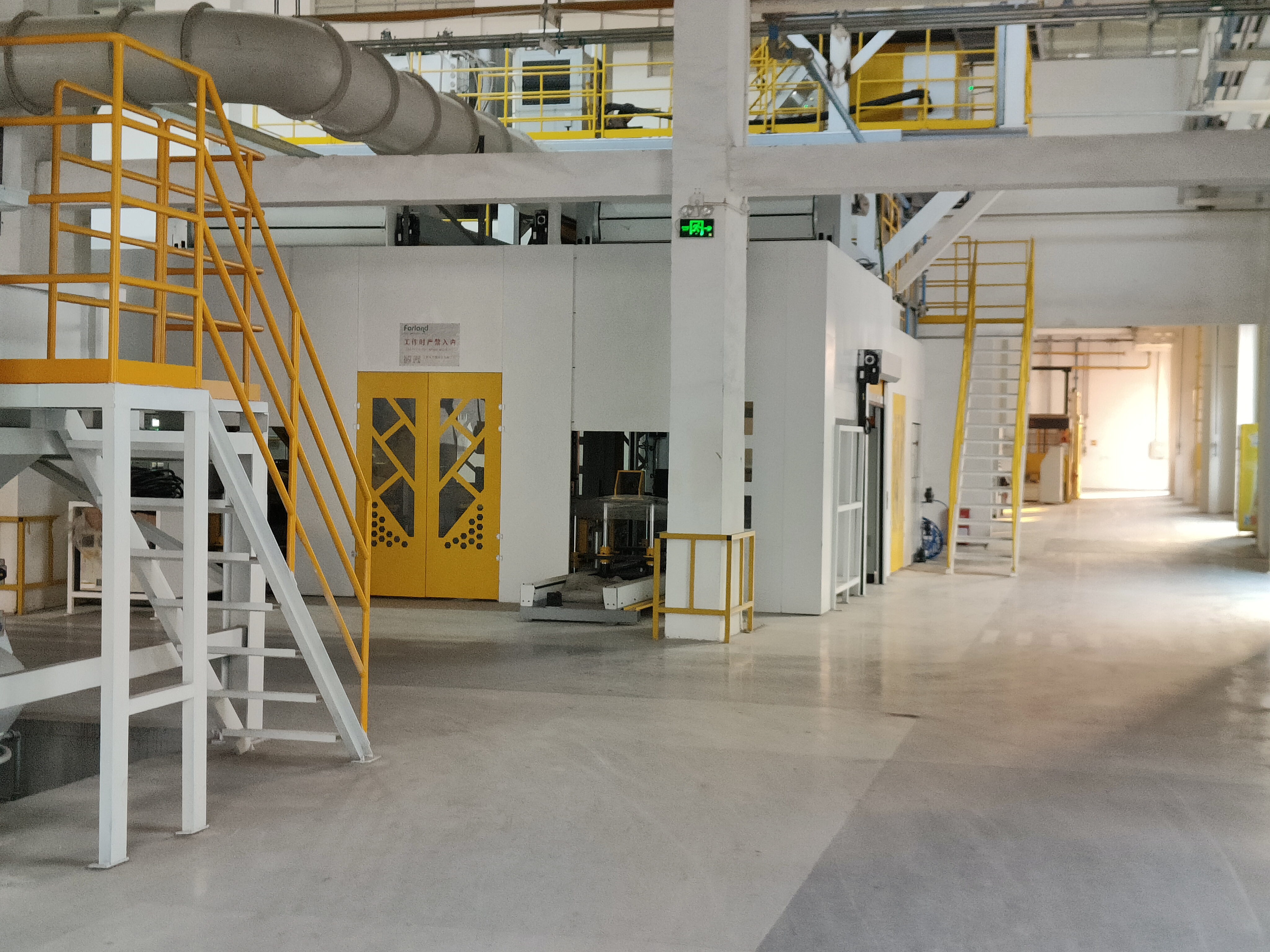
Evaluating a core shooter requires looking past the spec sheet and understanding how specific mechanical and control features translate into tangible production outcomes. The machine's ability to condition sand, control shoot pressure, and manage the chemical curing process directly dictates the quality of the cores and the efficiency of the foundry.
Consistent sand temperature is critical for predictable binder reaction times and extended bench life. Cold sand increases resin viscosity, leading to poor mixing and weak cores. Hot sand accelerates the chemical reaction, causing the mixed sand to cure prematurely in the magazine. Evaluate the machine's integration with sand heaters and coolers. The system must maintain the incoming sand within a tight temperature window, typically between 20°C and 25°C, regardless of ambient foundry conditions.
The sand delivery mechanism from the mixer to the core shooter magazine must be evaluated to prevent premature curing or binder separation. Pneumatic transport systems must use dry, conditioned air to avoid introducing moisture, which degrades cold box resins. The magazine itself should feature level sensors that trigger small, frequent batches from the mixer. This ensures the shooter always operates with freshly mixed sand rather than material that has been sitting and losing its flowability.
The shoot cycle is the most critical mechanical event in core making. Programmable shoot valves and proportional pressure controls are essential for achieving uniform sand flowability and core density. A sudden, uncontrolled blast of high-pressure air can cause localized sand blasting, eroding the core box and creating soft spots in the core due to air channeling. Proportional valves allow the machine to ramp up the shoot pressure gradually, fluidizing the sand and carrying it gently into the deepest recesses of the tooling.
The machine must handle different sand-to-binder ratios and various sand grain fineness levels without compromising compaction. Coarse sands require different fluidization dynamics than fine sands. Advanced core shooters allow operators to program multi-stage shoot profiles, tailoring the pressure curve to the specific geometry of the core box and the rheology of the sand mixture. This level of control minimizes tooling wear and ensures consistent core weight.
Core Defect | Potential Machine Cause | Corrective Action on Shooter |
|---|---|---|
Soft Centers / Uncured Sand | Inadequate amine vaporization or short gas time. | Increase carrier gas temperature; extend purge cycle. |
Core Box Wear / Erosion | Excessive initial shoot pressure. | Implement proportional valve ramping; reduce peak pressure. |
Parting Line Flash | Insufficient hydraulic clamping force. | Increase clamp pressure; check tie-bar alignment. |
Low Out-of-Box Strength | Degraded mixed sand in magazine. | Adjust mixer batch size; check sand temperature controls. |
The curing phase in the cold box process relies on the efficient delivery of an amine catalyst gas. Assess the amine gas delivery system, focusing on vaporization efficiency. Liquid amine must be completely vaporized and mixed with a heated carrier gas before entering the core box. Incomplete vaporization leads to liquid amine pooling in the tooling, which causes localized over-curing, sticky cores, and excessive chemical consumption. The distribution manifolds and sealing mechanisms must ensure uniform gas permeation through the entire sand mass.
Following the gassing phase, the purging cycle pushes fresh air through the core to remove residual catalyst and complete the curing reaction. Evaluate the purging cycle's effectiveness. Inadequate purging leaves cores smelling of amine and poses handling hazards to operators. Highly efficient purging drives sustainable practices by reducing overall volatile organic compound (VOC) emissions and ensuring that the maximum amount of amine is routed to the scrubber for neutralization.
During the shoot and gas phases, the core box is subjected to immense internal pressures. Review the hydraulic or pneumatic clamping systems for stability. Any separation of the core box halves during the shoot will result in dimensional inaccuracies and severe parting line flash, which requires manual grinding and increases scrap. The clamping mechanism must provide uniform force distribution across the entire surface area of the tooling.
For foundries running multiple core types, automated quick-change tooling features are non-negotiable. Standardized mounting plates, quick-connect pneumatics for ejection pins, and automated clamping drastically reduce downtime during changeovers. Assess the machine's compatibility with advanced corebox engineering. The blow plate design must accommodate optimized blow tube placement. The machine's exhaust routing must align with strategic corebox venting to eliminate trapped air and ensure complete gas permeation.
Modern core production relies heavily on advanced HMI and PLC architectures. Detail the requirements for these interfaces, prioritizing intuitive recipe management. Operators should be able to load pre-optimized parameters—shoot pressure, gas time, purge time, and clamp pressure—simply by selecting the core part number. Real-time parameter tracking allows supervisors to monitor the cycle and ensure the machine is operating within established control limits.
Data logging is necessary for advanced process optimization. The control system should record every cycle's parameters, providing a historical database for fault diagnostics and continuous improvement. By analyzing this data, foundry engineers can apply statistical methods to balance core strength against binder usage, fine-tuning the process to achieve maximum quality with minimal chemical input. Fault diagnostics reduce troubleshooting time by pinpointing the exact sensor or valve causing a stoppage.
Installing a new core shooter involves significant modifications to foundry infrastructure and workflows. Anticipating these implementation risks and developing mitigation strategies is essential for a smooth transition from commissioning to full production.
Core shooters require heavy-duty utility connections. Underestimating these requirements is a common implementation failure. Assess the compressed air infrastructure carefully. The machine requires a high volume of dry, clean air delivered at a stable pressure. A sudden pressure drop in the plant's air system during the shoot cycle will result in soft, unusable cores. Installing dedicated air receivers near the machine mitigates this risk.
Evaluate ventilation, exhaust routing, and scrubber capacity. The extraction system must be sized to handle the peak amine gas volume generated during the purge cycle. Improperly sized ductwork or an underpowered exhaust fan will result in amine gas leaking into the general foundry environment, creating severe safety and compliance issues. Ensure the layout allows for straight, unobstructed exhaust runs to the scrubber.
Transitioning existing core boxes to a new machine presents engineering challenges. Address the risks associated with retrofitting legacy tooling to fit the new machine's clamping footprint and blow plate configuration. Blow tube locations may need to be modified to align with the new magazine. Ejection mechanisms must be adapted to interface with the machine's hydraulic or pneumatic knockouts. Conduct a thorough tooling audit before installation to identify which boxes require modification and which are ready for immediate use.
You must also evaluate the venting area ratio on older core boxes. A new, high-efficiency Cold Box Core Shooter often pushes sand and gas at different velocities than legacy equipment. If the existing vents are clogged or undersized, the new machine will simply blow sand out of the parting line instead of filling the cavity. Upgrading to screen vents or slotted vents during the migration process prevents this issue.
The introduction of new technology requires comprehensive operator training. Outline standard operating procedures for safe amine handling, emphasizing the correct procedures for changing chemical totes and responding to leaks. Operators must be trained on the new HMI, focusing on how to adjust parameters safely without compromising core quality.
Ensure the equipment meets all local and international safety standards. The machine must be equipped with physical guarding, safety interlocks on all access doors, and light curtains across the core extraction zone. Emergency stops must be easily accessible. Training should also cover the safe extraction and handling of fragile green cores, ensuring that operators understand the mechanical limits of the out-of-box tensile strength before the core fully cures.
Audit your existing core box inventory to determine the exact blow area and clamping requirements needed for the new machine.
Install dedicated compressed air receivers and evaluate your current amine scrubber capacity before finalizing any equipment layout.
Request a pilot test from the equipment manufacturer using your specific sand grain fineness and resin formulation to verify out-of-box tensile strength.
Standardize your tooling mounting plates and quick-connect pneumatic lines to ensure rapid changeovers on the new system.
A: Cycle times vary based on core size and complexity, but automated machines typically range from 15 to 45 seconds per cycle. This includes clamping, shooting, gassing, purging, and extraction. Multi-station systems achieve faster output rates by performing these steps concurrently across different stations.
A: Shoot pressure dictates how effectively the sand-binder mixture fills the core box. Optimal, proportional pressure fluidizes the sand, ensuring high, uniform density and preventing soft spots. Excessive pressure causes sand blasting, which erodes tooling and traps air, while insufficient pressure leads to incomplete filling and weak cores.
A: Sand temperature directly impacts the viscosity and reaction rate of the cold box resins. Ideal temperatures between 20°C and 25°C ensure proper coating of the sand grains and predictable bench life. Hot sand causes premature curing in the magazine, while cold sand leads to poor mixing and lower core tensile strength.
A: Amine gas is hazardous and must be strictly controlled. The system requires localized exhaust hoods and sealed tooling to capture the gas during purging. This exhaust must be routed to a chemical scrubber, typically using an acid solution, to neutralize the amine before venting clean air into the atmosphere.
A: Yes, but it requires significant engineering modifications. Shell core boxes are designed for heat transfer, while cold box tooling requires extensive venting for gas permeation and blow tubes for sand injection. You must machine new vent locations, add blow tube ports, and install heavy-duty seals to contain the amine gas.
A: Blow tubes must be positioned to direct sand into deep cavities without creating turbulence. Venting allows the carrier air to escape during the shoot and guides the amine gas through the sand mass during curing. Poor venting creates dead zones where sand remains uncured and weak.


