
- All
- Product Name
- Product Keyword
- Product Model
- Product Summary
- Product Description
- Multi Field Search
English
Views: 0 Author: Site Editor Publish Time: 2026-04-24 Origin: Site


Two foundries can produce similar sand cores and still run very different processes. The reason is not only the tooling, but also the curing route behind the line. A core shooter may look similar across different setups, yet the difference between hot core shooting and cold core shooting can affect energy use, cycle rhythm, workshop conditions, and the kind of casting project a plant can support. Forland Technology develops core-making solutions for foundries that need a clearer match between process method and production target, so understanding this comparison is an important step before moving into equipment planning.
Hot core shooting relies on heated core boxes to cure the sand core after the material is shot into the tooling. The machine fills the cavity under controlled force, and the heat inside the tooling helps the binder harden into a stable core shape. This means the curing action is closely tied to the temperature condition of the box itself, so the process rhythm depends heavily on thermal control.
From a production point of view, hot core shooting is valued for its established operating logic. Many foundries use it because it offers a familiar route for stable, repeated cycles. Once the line is organized around heated tooling, the process can deliver a dependable flow from shooting to curing to ejection. That is why hot box systems continue to hold a place in many casting programs, especially where the workshop already has experience with this method.
Cold core shooting uses a different curing route. The sand is also shot into the core box, but instead of depending on heated tooling, the core hardens through a chemical process at room temperature. This changes the way the production line is organized. The machine no longer needs the same heat-based curing logic, and that affects energy planning, line layout, and operating rhythm.
In practice, cold core shooting is often discussed as a modern, efficient route for many demanding core applications. It supports detailed shapes and can fit foundries that want to reduce reliance on heated tooling during production. This does not make it automatically better in every case, but it does explain why cold box technology is widely considered when plants want efficient output with a more flexible shop-floor setup. Forland Technology includes both cold box and hot box solutions in its product range because the right answer depends on the project, not on a single standard method.
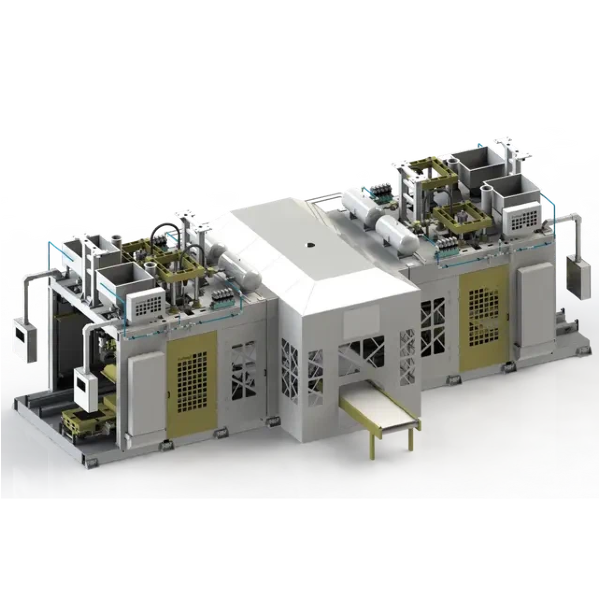
The first practical difference most factories notice is the way each process uses energy. Hot core shooting depends on heated tooling, so thermal input becomes part of the daily production requirement. This can support a steady curing cycle, but it also means the line must be managed around temperature conditions.
Cold core shooting removes that heated tooling requirement from the curing stage. That can reduce heat demand on the line and may simplify some aspects of daily operation. For projects where energy strategy matters, this becomes an important comparison point. It is not only a question of which process makes a core, but which process fits the plant’s operating priorities more naturally.
Cycle performance also feels different in use. Hot box production is often appreciated for its stable, repeated rhythm in a process environment already built around thermal curing. Cold box production is often favored where plants want efficient core making without the same dependence on hot tooling. In real foundry work, that difference can shape staffing, line balancing, and overall production planning.
From the product side, users care most about the finished core. Can it hold its shape well. Is the dimension stable from cycle to cycle. Can it survive handling and assembly without damage. These are the points that determine whether the process truly supports good casting performance.
Hot core shooting can offer solid repeatability when the heating condition is well controlled. Cold core shooting is often preferred for detailed shapes and efficient production where stable dimensional performance is required. Both routes can produce high-quality cores, but the best result depends on how well the process is matched to the part design, the binder system, and the production environment.
Surface finish and shape definition are also influenced by how evenly the cavity is filled and how consistently the core cures. That is why the comparison should not be simplified into a single statement such as one method being universally stronger or more accurate. The better question is how each process behaves under the actual conditions of the foundry and the target casting.
Workshop conditions matter more than many first-time buyers expect. A foundry comparing hot and cold core routes is usually looking beyond output numbers. It is also considering working environment, odor control, ventilation demand, and daily process management.
Hot core shooting brings heat into the production cycle, so the workshop must be arranged around thermal operation. Cold core shooting changes that environment because the curing route is different, even though it introduces its own practical requirements in chemical process management. For many projects, this becomes a serious evaluation point because plant conditions are part of long-term production efficiency, not a side issue.
That is one reason process comparison should stay practical. Foundries are not choosing between abstract technologies. They are choosing between two production routes that affect operators, equipment layout, and the wider workshop environment.
Comparison Item | Cold Core Shooter | Hot Core Shooter | Why It Matters |
Curing method | Chemical hardening at room temperature | Heat-driven curing in heated tooling | Changes line setup and operating logic |
Energy use | Lower dependence on heated tooling | Requires thermal input for curing | Affects daily production cost and planning |
Process rhythm | Efficient and flexible in many modern lines | Stable in heat-based production systems | Influences throughput and line balance |
Workshop condition | Different ventilation and chemical handling focus | Heat-related operating environment | Impacts shop-floor management |
Best fit | Detailed cores and efficient modern production | Established lines built around hot box processing | Helps match process to actual project needs |
Cold core shooting often makes more sense when a foundry wants room-temperature curing, lower heat dependence, and efficient output for complex core shapes. It is especially attractive in projects where production efficiency and process flexibility matter at the same time. For plants moving toward modern automated core-making lines, cold box systems are frequently part of the discussion because they can fit well with updated layout planning and output targets.
This is also why the Cold Box Core Shooter Machine remains an important product direction for Forland Technology. It reflects demand from customers who need a practical balance between shape complexity, production speed, and controlled daily operation.
Hot core shooting still holds strong value where the production line is already organized around heated tooling and stable repeat cycles. In these cases, the process logic is well understood, the workshop is configured for it, and the plant may prefer to continue with a method that fits its existing operating experience.
It also remains relevant in projects that prioritize a familiar thermal curing route and want to maintain a well-established processing rhythm. A Hot Box Core Shooter Machine is not an old-fashioned answer. In the right environment, it is still a very practical one.
Some projects move beyond hot box versus cold box when environmental targets become part of the specification. In those cases, inorganic core shooting enters the discussion as another route worth evaluating. It does not replace the comparison between hot and cold systems, but it does show that process planning is becoming broader in some parts of the foundry market.
Forland Technology includes inorganic core-making solutions alongside its hot box and cold box product lines, which gives customers more flexibility when project priorities shift.
In a real casting project, the better process choice depends on the part geometry, output target, available workshop conditions, energy strategy, ventilation requirements, and the level of automation the line is expected to support. A foundry producing detailed cores for a more modern layout may lean toward cold core shooting. A plant built around established heated tooling may find hot core shooting the more natural path. Both are proven techniques, but they support production in different ways.
That is why comparison should stay connected to application reality. The question is not which method sounds more advanced on paper. The question is which method fits the casting program more closely. Forland Technology approaches this comparison from that practical angle by offering hot core, cold core, and broader automated foundry solutions, helping customers plan around real production needs rather than a one-size-fits-all answer.
Hot core shooting and cold core shooting are both proven foundry techniques, but they solve production needs in different ways. One route is built around heated tooling and thermal curing, while the other supports room-temperature curing through a different process logic. That difference affects energy use, shop-floor conditions, line layout, and application fit. Forland Technology develops core-making solutions with this comparison in mind, so customers can align process choice with actual casting goals instead of making decisions on theory alone. If you are evaluating a new project or upgrading an existing line, contact us to discuss the most suitable solution, whether that means a cold box system, a hot box line, or a Hot Box Core Shooter Machine designed for stable foundry production.
The main difference is the curing route. Cold core shooting hardens the core through a chemical process at room temperature, while hot core shooting relies on heated tooling and heat-driven curing.
No. Cold core shooting works very well for many modern production needs, but hot core shooting still performs strongly in lines already built around heated tooling and stable thermal cycles.
Cold core shooting is often preferred when a foundry wants to reduce dependence on heated tooling. Hot core shooting requires thermal input, so energy planning is more closely tied to temperature control.
They compare these options because the process choice affects core quality, production rhythm, workshop conditions, and long-term line suitability. The right machine depends on the actual casting project, not just the equipment name.


