
- All
- Product Name
- Product Keyword
- Product Model
- Product Summary
- Product Description
- Multi Field Search
English
Views: 0 Author: Site Editor Publish Time: 2026-04-29 Origin: Site


A casting may look complete from the outside, but much of its real function depends on what happens inside. Internal passages, hollow sections, and hidden flow paths all rely on stable sand cores, and when those cores are not made well, the final part suffers. That is why a core shooter matters far beyond simple output. It supports quality, repeatability, and process confidence in daily production. Forland Technology develops core-making solutions for foundries that need reliable results across different casting programs, and the value of that equipment is easiest to understand by looking at where it is used and what it improves.
Before talking about machine structure or process type, it makes more sense to start with the casting itself. Different parts place very different demands on core production. Some need long internal passages. Some need narrow sections that must hold shape during handling. Some run in large volumes and require the same result every cycle. Others are lower in volume but much more complex in geometry.
That is why application always comes first. A foundry does not use a core shooter machine simply because it wants a modern process on paper. It uses one because the part design, required consistency, and production rhythm make controlled core production necessary. Once internal geometry becomes more demanding, manual variation becomes harder to accept. In that situation, the machine is no longer just an extra piece of equipment. It becomes part of the quality strategy behind the casting.
This application-first view is also important for product promotion. Customers rarely ask only what the machine is. They usually want to know where it fits, what kind of parts it supports, and whether it solves real production problems. That is why core shooter applications and advantages should be explained through actual use cases rather than broad factory theory.
Automotive castings are one of the most important application areas for core shooting technology. Many of these parts depend on stable internal passages and repeatable geometry. Cylinder heads, housings, structural parts, and similar components often need cores that hold tight dimensions over repeated production cycles. If the internal shape shifts, the finished casting may not meet assembly or performance requirements.
The same logic applies to parts linked with new energy vehicle production. As designs become more specialized and structural demands rise, internal accuracy matters just as much as outer form. A controlled core-making process helps the foundry maintain consistency when production volume is high and the tolerance for variation is low.
Pumps, valves, and fluid-control parts are another strong match for core shooter machines. These products rely on internal flow paths, and those paths must be shaped accurately to support function. If the core is unstable, the internal passage may change, and that can affect flow behavior, sealing, or downstream machining.
In these applications, dense and uniform cores are especially valuable. The foundry is not only trying to create a cavity inside the casting. It is trying to produce a functional internal form that has a direct effect on the finished part. That makes controlled core production far more important than it may appear at first glance.
Precision castings and machinery housings also benefit from core shooting technology because many of these parts include internal sections that are difficult to form by hand with the same consistency over time. When the internal structure becomes more demanding, so does the need for repeatable core making.
This is where the production value of a core shooter machine becomes clear. It helps the foundry maintain geometry, reduce variation, and support smoother transfer into mold assembly. For a business trying to produce more complex castings without losing process stability, that advantage is significant.
Application Area | Typical Core Requirement | Process Priority | Value Created |
Automotive castings | Stable internal passages and repeatable geometry | High consistency across large-volume runs | Better dimensional control and fewer production disruptions |
New energy vehicle parts | Accurate internal structure for specialized designs | Process stability with growing output demands | More dependable core quality in modern casting programs |
Pumps and valves | Smooth and accurate flow-path shaping | Dense, uniform cores | Better functional casting performance |
Precision castings and housings | Complex internal forms | Controlled repeatability | Higher quality and stronger production confidence |
One of the most common problems in core production is dimensional inconsistency. If one core differs too much from the next, the final castings will also vary. That creates trouble not only in casting quality, but also in machining, assembly, and inspection. A core shooter helps solve this by giving the foundry a more repeatable forming and curing process.
Automated shooting improves the way sand fills the tooling, while controlled curing helps the core maintain its intended shape. Together, these steps reduce variation across production cycles. For foundries making parts with internal channels or detailed cavities, this kind of repeatability is not a small improvement. It is a requirement for stable production.
Another common issue is breakage during transfer, storage, or mold preparation. A core that looks acceptable when first made may still fail if it lacks uniform strength. Thin sections may chip, edges may crack, and the final shape may be compromised before the pouring stage begins.
A core shooter machine addresses this by supporting more uniform compaction and more controlled curing. Stronger, more consistent cores move through the process with less risk. That makes assembly smoother and reduces losses caused by damage before the mold is even closed. In daily production, this kind of improvement helps both quality control and workflow stability.
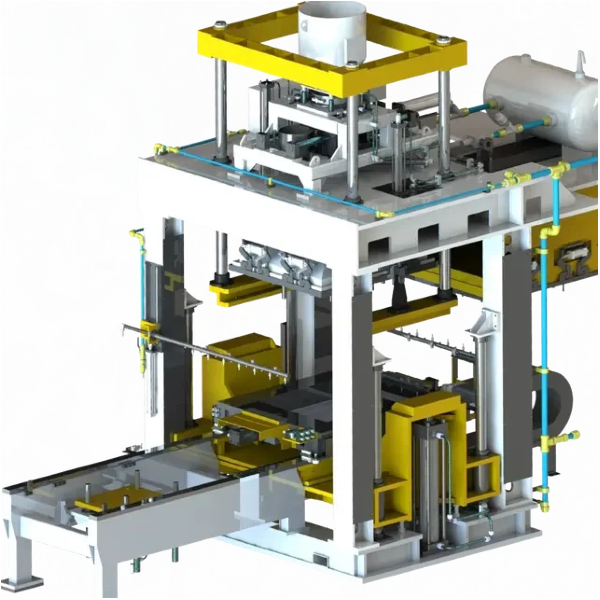
A core shooter creates value not only by making cores faster, but by making them more consistently. Higher output means little if the results vary too much from one cycle to another. What foundries really need is productive core making that still supports reliable dimensions and stable quality.
That is where the advantage becomes measurable. A controlled machine cycle helps keep production moving while reducing the variation that can lead to scrap or rework. Over time, this improves the efficiency of the entire casting process, not just the core room.
Manual core making depends heavily on individual consistency. As production scales up, that becomes harder to manage. A machine-based process gives the foundry a more standardized cycle, which reduces dependence on manual variation and makes process control easier to maintain.
This does not remove the need for experience, but it does create a more stable operating base. Supervisors can focus more on production quality, tooling condition, and workflow planning instead of correcting repeated manual differences. For many plants, that shift is one of the biggest daily advantages of using a core shooter machine.
Core making becomes even more important when a foundry moves toward greater automation. A process that is unstable at the core stage will weaken the efficiency of the whole line. A core shooter helps support automation cells and integrated production lines by delivering more predictable cycle performance.
This is where Forland Technology’s broader product direction fits naturally into the article. The company does not focus only on standalone core-making equipment. Its product range also connects with larger foundry automation and production-line planning. That matters for customers who want core production to work as part of a wider system rather than as an isolated step.
Hot box core making suits applications that benefit from heated curing and a stable production rhythm. In lines built around this approach, the process can support fast repeated cycles and dependable daily output. For demanding production targets where thermal curing already fits the workshop layout, a Hot Box Core Shooter Machine remains a practical and effective solution.
Cold box core making is often chosen for applications that value room-temperature curing, lower dependence on heated tooling, and flexible high-throughput operation. It is especially relevant where complex core shapes and efficient output need to go together. A Cold Box Core Shooter Machine can be a strong fit for foundries aiming to improve process efficiency while maintaining core quality.
Some applications now place greater attention on cleaner production goals, and that is where inorganic core-making routes enter the picture. The value here is practical rather than abstract. Foundries looking at workshop conditions, process direction, and long-term production requirements may see inorganic solutions as part of a broader upgrade path.
Once part complexity rises and output begins to scale, core production stops being a background step. It becomes a direct lever for quality, efficiency, and line stability. A foundry that wants to upgrade its casting capability must pay attention to how the internal geometry of the part is being supported, because poor core consistency will eventually show up elsewhere in the process.
That is why the applications and advantages of a core shooter matter so much. The machine helps foundries match the process to the part, improve repeatability, reduce avoidable disruption, and prepare for more connected production. Forland Technology supports this direction with hot core, cold core, and inorganic core shooting solutions designed for different application needs and broader foundry integration.
The real value of a core shooter is not only that it makes sand cores. It helps foundries produce more consistent internal geometry, improve output, reduce variation, and match the production route to the part itself. That makes it an important tool for automotive castings, fluid-control parts, precision components, and many other demanding applications. Forland Technology builds its core-making portfolio around those practical needs, helping customers move from basic core production to more stable and efficient casting performance. If your project requires dependable internal core quality and stronger process control, contact us to learn more about the right solution, including a Cold Box Core Shooter Machine or other core-making systems for your application.
Core shooter machines are widely used in automotive casting, new energy vehicle parts, pumps, valves, fluid-control components, precision castings, and machinery housings where internal geometry must stay consistent.
It helps solve inconsistent core dimensions, unstable handling strength, and process variation that can lead to casting defects, rework, or production delays.
Complex cast parts often depend on narrow internal passages or hidden cavities. A core shooter helps maintain the shape and strength needed to support those internal structures through repeated production cycles.
A foundry should compare these options when production goals, line layout, curing method, output target, and workshop conditions require a process route that better matches the actual casting application.


