
- All
- Product Name
- Product Keyword
- Product Model
- Product Summary
- Product Description
- Multi Field Search
English
Views: 0 Author: Site Editor Publish Time: 2026-09-02 Origin: Site


High-volume metal casting operations face a persistent bottleneck during the finishing stage: removing internal sand cores from complex castings. Manual sand removal relies heavily on pneumatic tools and physical force. This outdated approach creates unpredictable cycle times and slows down overall production. It also causes high scrap rates due to accidental casting damage. Furthermore, manual hammering exposes workers to severe occupational health risks. Operators face constant silica dust exposure and run a high risk of developing vibration syndrome. Foundries must transition away from variable manual labor to remain competitive. Implementing an automated Decoring Machine provides a necessary operational upgrade. This technology shifts internal sand removal from an unpredictable manual chore to a highly controlled, scalable manufacturing process. Automation brings predictability and precision to the finishing department. You can finally align your finishing speed with your automated pouring lines, ensuring a smoother, safer, and highly efficient production workflow.
Scrap Reduction: Automated decoring machines utilize precise, adjustable vibration frequencies to remove sand without inducing micro-fractures or surface damage to complex castings.
Throughput Acceleration: Integrating a dedicated decoring station drastically reduces cycle times, aligning the finishing department's pace with the molding and pouring lines.
Safety & Compliance: Enclosed decoring systems mitigate airborne silica dust, manage acoustic emissions, and eliminate ergonomic hazards associated with manual hammering, ensuring strict environmental and occupational compliance.
ROI Timeline: Capital expenditure on decoring equipment is typically recouped through reduced labor costs, lower defect rates, decreased energy consumption, and increased overall equipment effectiveness (OEE).
Scaling a foundry operation exposes the glaring weaknesses of traditional sand removal methods. Manual decoring simply cannot keep pace with modern automated molding and pouring lines. Relying on human operators to manually hammer out intricate sand cores creates an immediate production bottleneck. The physical limitations of manual labor directly throttle the output of the entire facility.
Manual decoring is incredibly labor-intensive. Workers use heavy pneumatic hammers to strike castings repeatedly, aiming to break down the internal sand core binders through brute force. The physical exertion required is immense, and operator fatigue sets in quickly. As fatigue increases, the thoroughness of sand removal decreases. This inconsistency leaves residual sand trapped deep inside complex internal cooling jackets or fluid passages.
Secondary Cleaning Labor: Castings with residual sand require secondary, manual cleaning stations. This adds unnecessary labor hours to every batch and disrupts the production flow.
Downstream Machining Damage: Trapped sand often escapes during downstream CNC machining. Silica sand is highly abrasive. When it mixes with machining coolant, it destroys expensive cutting tools rapidly, accelerates tooling wear, and forces production halts for premature tool replacements.
Elevated Scrap Rates: Excessive manual hammering frequently causes surface denting or micro-fractures in the casting itself. This wastes the energy and raw materials already invested in the poured metal.
Foundry throughput is only as fast as its slowest process. In many facilities, the finishing and cleaning departments act as a massive throttle on overall output. Automated molding machines produce molds at a rapid pace, and automated pouring systems fill those molds efficiently. However, if the decoring process relies on manual labor, castings pile up on the cooling floor. The finishing department simply cannot process the metal fast enough.
Manual decoring scales poorly. You cannot easily double your decoring output without doubling your floor space and workforce. Hiring and retaining workers for such harsh, physically demanding labor is increasingly difficult. The inability to scale manual decoring linearly with automated pouring lines forces foundries to throttle their primary production. Upgrading to an automated finishing system eliminates this bottleneck and allows the entire facility to operate at its true capacity.
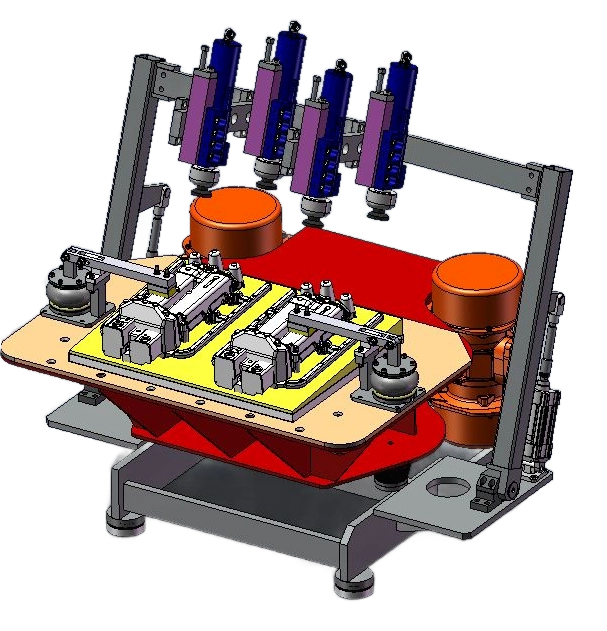
Transitioning to automated sand removal transforms the finishing department. A dedicated Decoring Machine introduces precision, speed, and safety into an otherwise chaotic process. Foundries gain immediate control over cycle times and scrap rates.
Automated decoring relies on targeted kinetic energy rather than random brute force. These machines use programmable servo-motors to generate specific vibration frequencies. The equipment clamps the casting securely and applies directional impact energy. This energy transfers through the metal and directly into the sand core, rapidly breaking the chemical bonds of the sand binder.
The true advantage lies in resonance tuning. Every casting geometry has a specific resonant frequency. Modern decoring equipment allows operators to tune the vibration frequency to match the casting. This targeted resonance pulverizes the internal sand without inducing metallurgical stress in the metal. Preventing stress is necessary when processing thin-walled aluminum components or complex iron castings. Manual hammering often causes cracking or deformation in these delicate areas. Precision frequency control eliminates this risk and drives scrap rates down significantly.
Automation replaces variable human labor with fixed, programmable machine cycles. A manual operator might take five minutes to clean a complex engine block on Monday morning. By Friday afternoon, fatigue might stretch that time to twelve minutes. This variability makes production planning nearly impossible. Automated equipment executes the exact same cycle time every single run.
Predictable throughput allows for accurate scheduling and reliable delivery times. Advanced decoring equipment often features multi-station or multi-head configurations. These systems process two, four, or even six castings simultaneously. A multi-head setup drastically reduces the per-part cycle time, ensuring the finishing department easily keeps pace with the continuous output of the pouring line.
Foundry environments pose significant health risks, primarily from silica dust and noise. Manual decoring generates massive clouds of airborne silica. Inhaling this dust leads to silicosis, a severe respiratory disease. Regulatory bodies strictly monitor and penalize excessive silica exposure. Modern decoring equipment addresses this hazard directly.
Automated systems operate inside fully enclosed, sound-proofed cabins. These cabins feature dedicated dust extraction ports. High-powered vacuums pull airborne silica out of the chamber before the doors open. This keeps the surrounding factory air clean and ensures strict regulatory compliance. Automation completely removes the operator from the physical hammering process, eliminating the risk of Hand-Arm Vibration Syndrome (HAVS).
Traditional manual decoring relies heavily on compressed air. Pneumatic hammers consume massive volumes of air continuously. Generating compressed air is one of the most expensive utility costs in any manufacturing facility. Pneumatic systems are also prone to leaks, further wasting energy.
Modern automated decoring systems utilize highly efficient servo-electric drives. Electric vibration motors consume a fraction of the energy required to power a bank of pneumatic hand tools. The kinetic energy transfers directly into the casting with minimal loss. This shift from pneumatic to electric power significantly reduces the overall carbon footprint of the finishing department.
Metric | Manual Pneumatic Decoring | Automated Decoring Machine |
|---|---|---|
Cycle Time | Highly variable (fatigue dependent) | Fixed, programmable, and consistent |
Scrap Rate | High (due to brute force damage) | Low (due to resonance tuning) |
Energy Source | High-volume compressed air | Efficient servo-electric drives |
Operator Hazard | Silica exposure, HAVS, high noise | Fully enclosed, isolated operation |
Investing in automated finishing equipment yields a strong return on investment. Foundries recoup their capital expenditure through several compounding factors. Direct labor costs drop as fewer operators are needed to process the same volume of castings. The drastic reduction in scrap parts saves raw material and melting energy. Consumable costs decrease as the reliance on manual pneumatic tools and replacement chisels disappears.
Beyond direct savings, automation provides a strategic labor advantage. Foundries struggle to hire workers for physically punishing tasks. By automating the decoring process, you can reallocate your existing workforce to higher-value roles. Operators can transition into quality assurance, machine programming, or preventative maintenance. This improves employee retention and utilizes human intelligence where it matters most.
Not all decoring technologies suit every casting type. Selecting the right equipment requires matching the machine's mechanics to your specific production needs. Foundries must evaluate mechanical vibration, water jet, and thermal systems. Each technology offers distinct advantages depending on casting complexity and binder chemistry.
Mechanical vibration systems are the workhorses of the foundry industry. They utilize heavy-duty electric motors to generate high-frequency impacts. The machine clamps the casting and shakes it violently, pulverizing the internal sand core. The loose sand then falls out through the casting's natural openings.
These systems are ideal for high-volume production. They excel at processing automotive parts like engine blocks, cylinder heads, and standard iron or aluminum castings. The primary advantages are high processing speed, robust reliability, and low utility consumption. However, mechanical systems do have limitations. They struggle to completely clear highly intricate, deeply internal cooling jackets without secondary processes. If a casting lacks sufficient exit holes, the pulverized sand cannot escape easily.
Water jet systems take a completely different approach. Instead of vibration, they use high-pressure water streams to blast the sand core out of the casting. A robotic arm typically guides a specialized nozzle directly into the casting's internal cavities. The high-pressure water cuts through the hardened sand binder instantly.
This technology is best suited for aerospace components, delicate alloys, and castings with highly complex internal geometries. The biggest advantage is the complete absence of mechanical stress. The water jet removes all binder residues perfectly without vibrating or impacting the fragile metal. However, water jet systems require higher initial capital. They also necessitate complex water treatment and filtration systems to separate the wet sand from the water. Cycle times are generally slower compared to mechanical vibration.
Feature | Mechanical / Vibration Decoring | Water Jet Decoring |
|---|---|---|
Primary Mechanism | High-frequency kinetic impact and resonance. | High-pressure targeted water streams. |
Best Use Cases | Engine blocks, high-volume automotive, standard iron. | Aerospace, delicate alloys, complex internal jackets. |
Mechanical Stress | Low to moderate (requires precise resonance tuning). | Zero mechanical stress on the casting. |
Cycle Time Speed | Very fast (often under 60 seconds per cycle). | Slower (requires precise robotic nozzle routing). |
Utility Requirements | Electric power, standard dust extraction. | High-pressure pumps, complex water filtration. |
Thermal decoring combines heat treatment with core sand breakdown. Castings are placed into a high-temperature furnace. The intense heat burns off the organic binders holding the sand core together. As the binder combusts, the sand core collapses into loose grains. This process often doubles as a metallurgical heat treatment for the casting itself.
Integrating thermal decoring with sand reclamation offers massive material savings. Once the sand collapses out of the casting, automated conveyors transport it directly to a reclamation unit. The system cleans and cools the sand, making it ready for immediate reuse in the core shooter. Recycling core sand directly from the decoring process drastically reduces raw material purchasing requirements and minimizes waste disposal fees.
The type of sand binder you use heavily dictates your decoring technology choice. The foundry industry is rapidly shifting toward environmentally friendly inorganic binders. These binders produce zero harmful emissions during pouring. However, inorganic binders harden significantly post-casting. They do not burn off or degrade from the heat of the molten metal like traditional organic resins do.
Removing inorganic cores requires decoring equipment with substantially higher impact forces. You need specialized hammer configurations and aggressive vibration profiles to break these rigid bonds. Alternatively, water jet systems excel at dissolving inorganic binders. You must also consider 3D-printed sand cores. Printed cores often feature incredibly complex, un-vented internal geometries. These intricate designs require highly programmable, multi-axis decoring machines to ensure all trapped sand is successfully evacuated.
Procuring an automated sand removal system requires careful technical evaluation. You must look beyond the basic specifications and analyze how the equipment integrates into your specific facility. Focus on payload capacities, automation compatibility, and long-term maintenance requirements.
The physical size and weight of your castings dictate the required machine size. You must evaluate the machine's maximum payload limit. This limit must comfortably exceed the weight of your heaviest casting, including the internal sand and the gating system. Pushing a machine to its maximum payload limit daily will accelerate wear and cause premature motor failure.
Equally important is the clamping system. The machine must grip the casting securely without crushing it. Evaluate the flexibility of the tooling and fixture changeovers. High-mix, low-volume production environments require rapid fixture changes. If swapping clamping jaws takes two hours, you lose valuable production time. Look for systems with quick-change tooling or programmable, adaptive clamping jaws that handle multiple geometries.
A standalone machine still requires manual loading, which limits its potential. To maximize throughput, the equipment must integrate seamlessly with your existing foundry automation. Assess the machine's capability to interface with robotic loading and unloading arms. The cabin doors must open quickly and provide clear access for the robot gripper.
Evaluate the control systems. The machine's PLC must communicate flawlessly with your central foundry management software. Data logging capabilities are essential for tracking cycle times, vibration frequencies, and fault codes automatically. Ensure the system includes automated sand discharge conveyors. The pulverized sand must be continuously evacuated from the machine base to prevent internal blockages.
Initial capital expenditure is only one part of the financial equation. You must evaluate the ongoing operational expenses required to keep the equipment running. Electricity consumption is a primary factor. Compare the kilowatt-hour ratings of the servo-motors across different vendors. Highly efficient motors save thousands of dollars annually.
Consider the compressed air requirements for pneumatic clamping jaws or internal blow-off nozzles. While less than manual tools, excessive air usage still drives up utility costs. Factor in waste disposal. If you opt for a water jet system, calculate the costs associated with filtering and disposing of the wet sand sludge. Understanding these ongoing expenses ensures accurate budgeting and prevents post-installation financial surprises.
Foundry environments are incredibly harsh. Decoring equipment operates in a continuous storm of highly abrasive silica sand. This environment destroys unprotected mechanical components rapidly. You must analyze the durability of the machine's internal design. Ensure all linear guides, bearings, and motors are fully sealed and pressurized to keep dust out.
Evaluate the accessibility of common wear parts. Hammers, clamping jaws, and vibration isolation mounts will eventually require replacement. If replacing a hammer requires disassembling the entire cabin, your maintenance downtime will skyrocket. Wear parts should be easily accessible from the front of the machine. Review the vendor's service level agreement to ensure they guarantee rapid delivery of replacement parts.
Installing heavy industrial machinery carries inherent risks. Proper planning is required to ensure a smooth transition from manual to automated finishing. You must address foundation requirements, acoustic compliance, and operator training long before the equipment arrives on your floor.
High-frequency vibration machines generate massive amounts of kinetic energy. If not properly isolated, this energy transfers directly into the foundry floor. Structural vibration transfer can severely damage nearby precision equipment, such as CNC mills or CMM inspection machines. It can also cause long-term damage to the building's foundation.
Mitigating this risk requires accurate spatial planning and civil engineering. You cannot simply bolt these machines to a standard concrete floor. They require isolated, reinforced concrete foundations. The installation pad must be physically separated from the surrounding floor slab using vibration-damping materials. Work closely with the equipment vendor to obtain exact foundation blueprints months before delivery.
High-impact decoring is an incredibly loud process. Metal striking metal, combined with high-frequency vibration, easily exceeds safe decibel limits. Operating above 85 decibels without proper protection violates occupational safety regulations and invites heavy fines. Noise pollution also degrades the working environment for the entire facility.
Ensure the procurement package includes heavy-duty acoustic enclosures. The machine cabin must be constructed from thick, sound-dampening materials. Inspect the door seals closely, as noise easily escapes through poor gaskets. A properly designed acoustic cabin reduces the operational noise to safe, compliant levels, protecting your workforce and your company from liability.
Automated equipment requires skilled operators to manage the process. Misconfigured vibration settings can destroy a batch of expensive castings in seconds. Applying too much clamping pressure will crush delicate aluminum parts. Transitioning your workforce from manual hammering to machine programming requires dedicated effort.
Emphasize the need for comprehensive vendor training. Your team must learn how to create specific processing recipes for different casting geometries. They need to understand how to tune vibration frequencies and adjust impact forces accurately. Maintenance personnel must be trained on daily preventative maintenance protocols. Proper training ensures you maximize the equipment's potential while avoiding catastrophic setup errors.
Initiate a comprehensive cycle-time analysis with shortlisted vendors to compare their proposed throughput against your current manual baseline.
Request a physical pilot test using your foundry's most difficult, complex casting to verify the machine's actual core removal capabilities.
Conduct a thorough site audit with structural engineers to define the necessary foundation isolation and acoustic enclosure requirements.
Review your current binder chemistry with the equipment manufacturer to ensure the machine's impact force can handle post-casting hardness.
A: Cycle times vary significantly based on casting size, core complexity, and binder type. A standard automotive iron casting might take 10 to 30 seconds. Highly complex geometries or rigid inorganic binders can extend the cycle time to 3 minutes. Multi-head machines process several parts simultaneously, drastically reducing the average time per part.
A: Yes, modern machines handle both materials effectively. Operators must strictly adjust the programmable recipes. Aluminum is softer and more prone to deformation. The clamping pressure, impact force, and vibration frequencies must be dialed back compared to the aggressive settings used for heavy iron castings.
A: Inorganic binders maintain high residual strength post-casting because they do not burn off like organic resins. Handling them requires specialized, high-impact mechanical machines featuring aggressive hammer configurations. Water jet systems are also highly effective, as the high-pressure water dissolves and cuts through the rigid inorganic bonds without relying on mechanical force.
A: Automated systems feature specialized discharge chutes built into the machine base. As the core sand is pulverized, it falls through these chutes directly onto vibratory conveyors. These conveyors transport the loose sand away from the finishing area and feed it directly into thermal or mechanical reclamation units for recycling.
A: High-frequency kinetic equipment cannot be bolted to standard factory floors. They require isolated, reinforced concrete pads. These specialized foundations absorb the massive kinetic energy generated during the cycle. Isolation prevents structural vibration transfer, which could otherwise damage the building or disrupt nearby precision machining equipment.
A: Neither is universally better; they serve different needs. Water jet decoring is superior for delicate alloys and complex internal geometries because it applies zero mechanical stress. Mechanical vibration is vastly superior for high-speed, high-volume production environments where rapid cycle times and lower operational costs are prioritized.
A: Automated systems drastically improve safety by removing operators from hazardous manual labor. Enclosed, extracted cabins capture airborne silica dust, preventing respiratory diseases and ensuring environmental compliance. Acoustic enclosures manage severe noise pollution. Automation eliminates the ergonomic injuries and vibration syndrome caused by manual pneumatic hammering.


