
- All
- Product Name
- Product Keyword
- Product Model
- Product Summary
- Product Description
- Multi Field Search
English
Views: 0 Author: Site Editor Publish Time: 2025-09-15 Origin: Site


Mold material plays a critical role in the quality, efficiency, and cost-effectiveness of gravity die casting operations. The choice of material affects not only the durability and lifespan of the mold but also the surface finish, dimensional accuracy, and consistency of the final cast components. Selecting the appropriate mold material is essential for optimizing production, reducing defects, and maintaining repeatable results. In gravity die casting, where molten metal is poured under gravity into a reusable mold, the mold must withstand high thermal and mechanical stresses while maintaining precise dimensions. Using a Gravity Die Casting Machine, manufacturers can achieve consistent results, but the effectiveness of the process depends heavily on the materials used to construct the molds.
Tool steels are the most widely used materials for molds in gravity die casting due to their exceptional combination of strength, hardness, and heat resistance. Common grades include H13, D2, and P20, each carefully selected based on the specific requirements of the casting process and the type of alloy being cast.
Key Features of Tool Steels:
High Wear Resistance: Tool steels can endure repeated cycles of molten metal exposure without significant degradation. This durability is essential for medium to high-volume production, ensuring consistent mold performance over time.
Excellent Heat Resistance: These steels maintain structural integrity under high temperatures, minimizing thermal expansion and reducing the risk of cracking, warping, or other heat-related defects.
Dimensional Stability: Tool steels retain their shape and precise tolerances over many casting cycles, which guarantees consistent part quality and reduces the need for extensive post-processing.
Applications: Tool steel molds are typically used for casting aluminum, magnesium, and copper alloys. They are ideal for producing automotive brackets, engine housings, aerospace components, and industrial machinery parts where precision, reliability, and durability are critical.
Cast iron is another material commonly used in gravity die casting molds, particularly for lower-volume, less complex, or less demanding applications. It provides a cost-effective alternative to tool steels while still offering acceptable durability and thermal performance.
Key Features of Cast Iron:
Cost-Effective Option: The lower material cost makes cast iron molds an attractive choice for projects with tighter budgets or where the production volume does not justify the expense of tool steel molds.
Good Durability: Cast iron molds can withstand multiple casting cycles, although their lifespan is generally shorter than that of tool steel molds.
Ease of Machining: Cast iron is relatively easy to machine, allowing for faster mold preparation, modifications, or repairs when needed.
Applications: Cast iron molds are often used in the production of larger, simpler components such as machinery housings, brackets, or automotive parts that do not require extremely tight tolerances. Their balance of cost and performance makes them suitable for small to medium production runs and less intricate designs.
Even high-quality mold materials benefit significantly from additional coatings and surface treatments, which enhance performance, improve durability, and extend overall mold lifespan. Proper mold coatings not only improve thermal resistance but also reduce metal adhesion and facilitate the smooth release of cast components, ensuring consistent quality across production cycles.
Ceramic coatings provide excellent thermal insulation, effectively reducing heat transfer between the molten metal and the mold. This minimizes the risk of thermal shock, oxidation, and surface erosion, protecting the mold over repeated casting cycles. Ceramic coatings also help maintain dimensional stability and prevent localized overheating, which can degrade the mold material over time.
Graphite coatings improve the release of cast parts from the mold, significantly reducing sticking and minimizing surface defects on finished components. In addition, graphite can provide a degree of lubrication, decreasing friction and wear on the mold surface, and helping preserve the precision of mold dimensions over multiple cycles.
Protective sprays, such as molybdenum disulfide or other specialized compounds, further extend mold life by reducing direct contact with molten metal. These coatings help maintain a consistent surface finish, prevent micro-cracking, and reduce overall wear, particularly in molds subjected to high thermal and mechanical stress.
In practice, these coatings and treatments are often applied in combination to achieve optimal mold performance. When using a Gravity Die Casting Machine, which relies on precise pouring, controlled cooling, and consistent cycle times, the application of advanced coatings is essential for maximizing efficiency, reducing defects, and ensuring the long-term reliability of the mold. Proper selection and maintenance of coatings contribute directly to higher-quality castings and lower operational costs.
The choice of mold material must be accompanied by careful mold design, considering factors such as thermal conductivity, mechanical strength, and resistance to molten metal erosion.
Efficient heat transfer ensures proper solidification of the molten metal and reduces cycle times.
Tool steels generally offer superior thermal stability compared to cast iron, leading to more uniform cooling and fewer internal defects.
Molds must withstand the mechanical stresses of handling, clamping, and pouring operations.
Stronger materials prevent deformation and maintain dimensional accuracy throughout repeated cycles.
Continuous exposure to high-temperature molten metal can erode or pit the mold surface.
High-grade tool steels and properly coated surfaces resist erosion, extending mold life.
Maintaining precise mold dimensions is critical for producing high-quality parts consistently.
Materials with low thermal expansion and high structural integrity, such as tool steels, are ideal for precision gravity die casting operations.
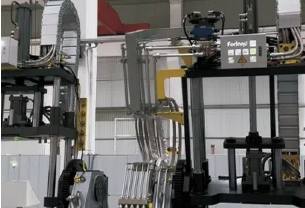
Several factors influence the selection of mold materials for gravity die casting:
Aluminum and magnesium alloys require molds with excellent thermal conductivity and durability, making tool steels ideal.
Copper alloys, which melt at higher temperatures, demand molds with superior heat resistance.
High-volume production justifies the investment in tool steel molds due to their longevity and consistent performance.
Low to medium-volume production may benefit from cast iron molds to reduce initial costs.
Fine surface finishes and tight tolerances favor the use of tool steels and coated surfaces.
For components where minor imperfections are acceptable, cast iron molds can be sufficient.
Tool steels and advanced coatings represent higher upfront costs but reduce long-term production costs through durability and fewer defects.
Cast iron molds are more affordable initially but may require frequent replacement and more post-processing.
Tool steels dominate mold construction in modern gravity die casting due to their unique combination of mechanical properties, thermal stability, and wear resistance. These steels provide consistent dimensional accuracy, long mold life, and the ability to produce high-quality parts with minimal finishing. The use of a Gravity Die Casting Machine further enhances the benefits of tool steel molds, ensuring controlled pouring, uniform solidification, and reduced defect rates.
Advances in coatings and heat treatment processes have further extended mold performance, allowing tool steels to remain the preferred choice for medium to high-volume production in automotive, aerospace, and industrial applications.
The choice of mold material is a critical factor in successful gravity die casting. Tool steels, especially grades like H13 and D2, are widely used due to their excellent wear resistance, heat tolerance, and dimensional stability. Cast iron remains a cost-effective option for simpler or lower-volume production, though its shorter lifespan limits broader applicability. Advanced coatings and surface treatments further enhance mold performance, reduce defects, and extend service life. Selecting the right mold material depends on factors such as alloy type, production volume, desired surface finish, and budget. Utilizing a high-quality Gravity Die Casting Machine ensures consistent, precise, and efficient production. To explore the latest mold technologies, coatings, and casting solutions tailored to your manufacturing needs, consider contacting Wuxi Forland Technology Co., Ltd., a trusted expert in advanced gravity die casting solutions.


